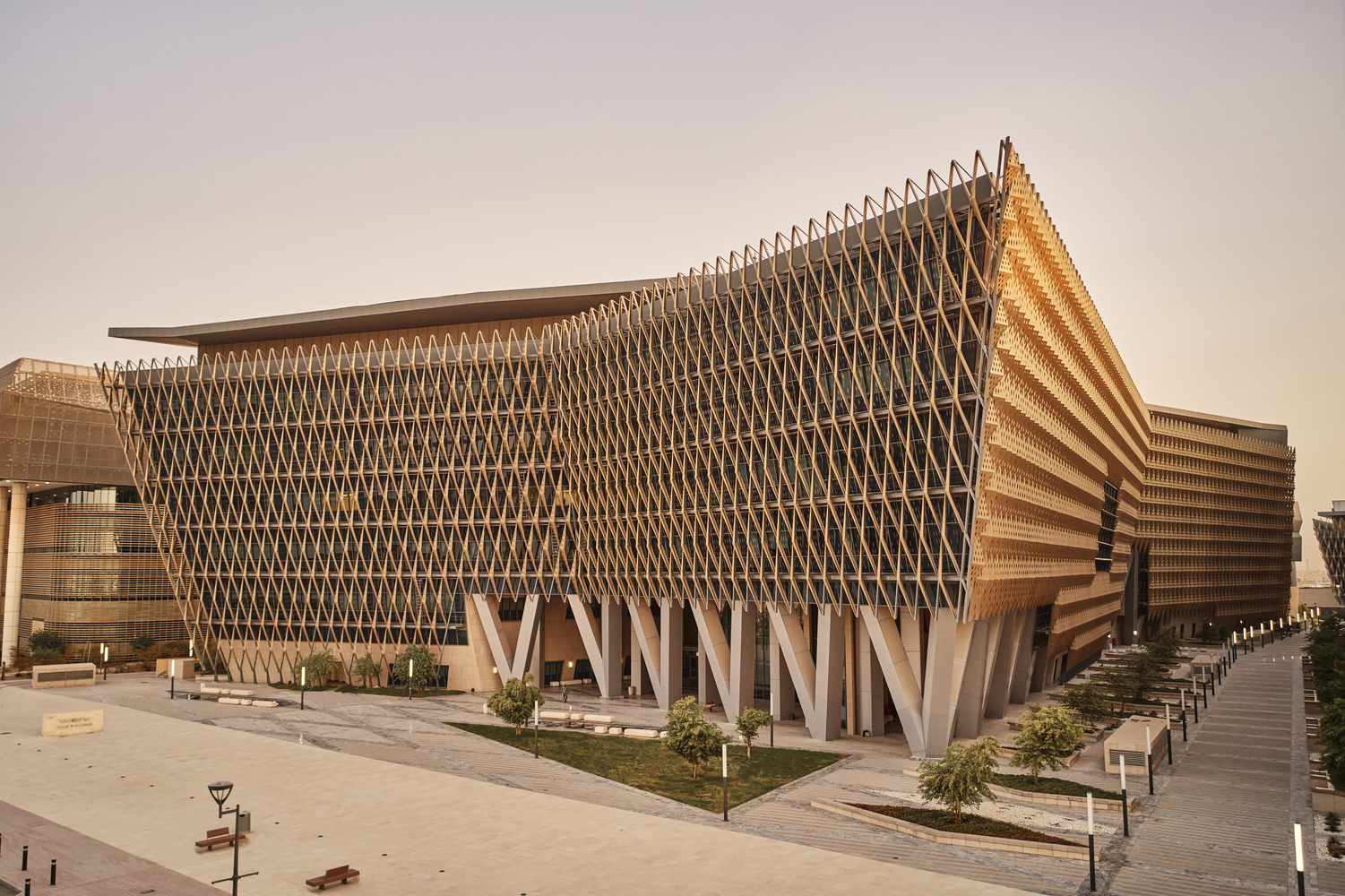
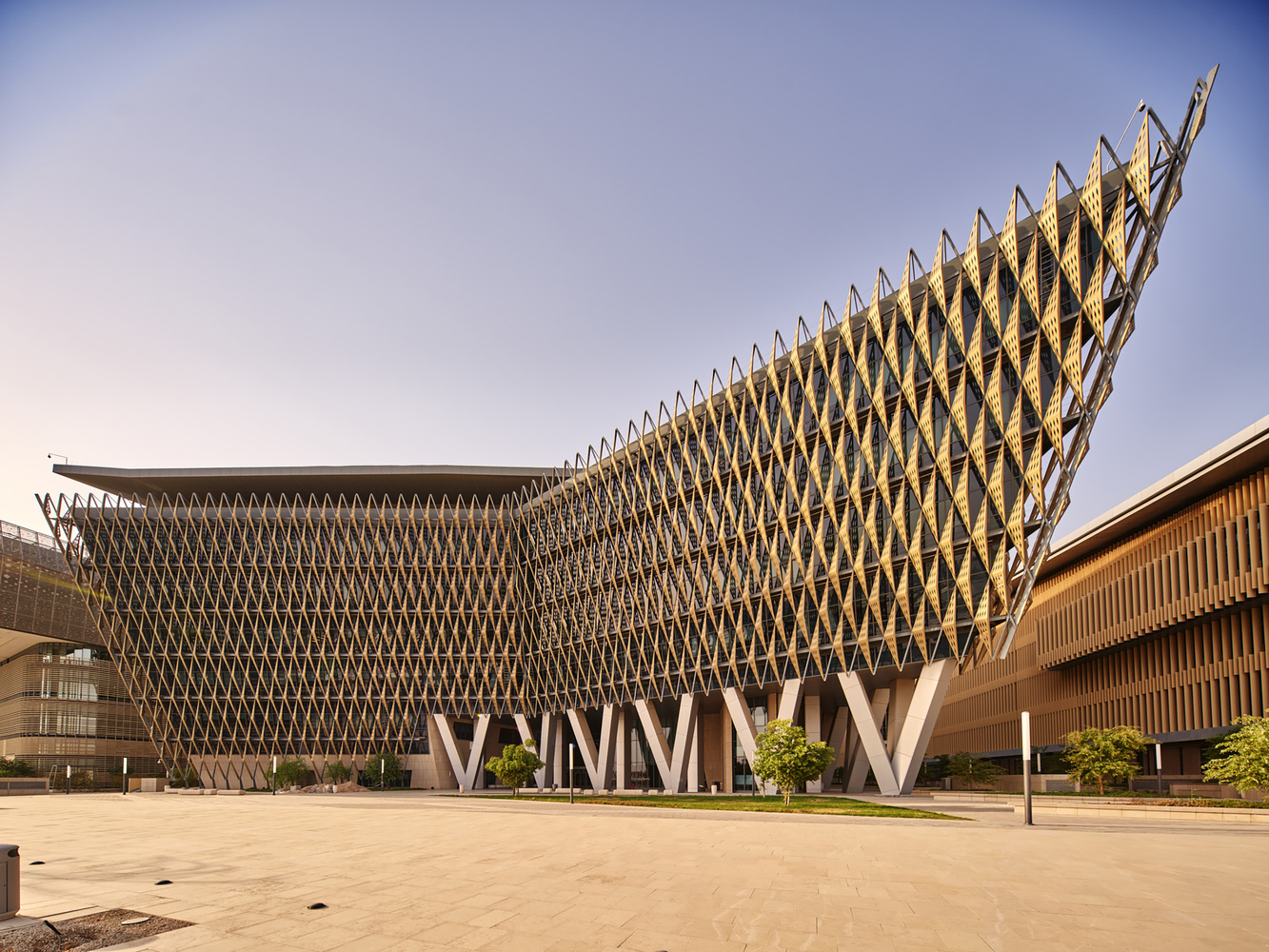
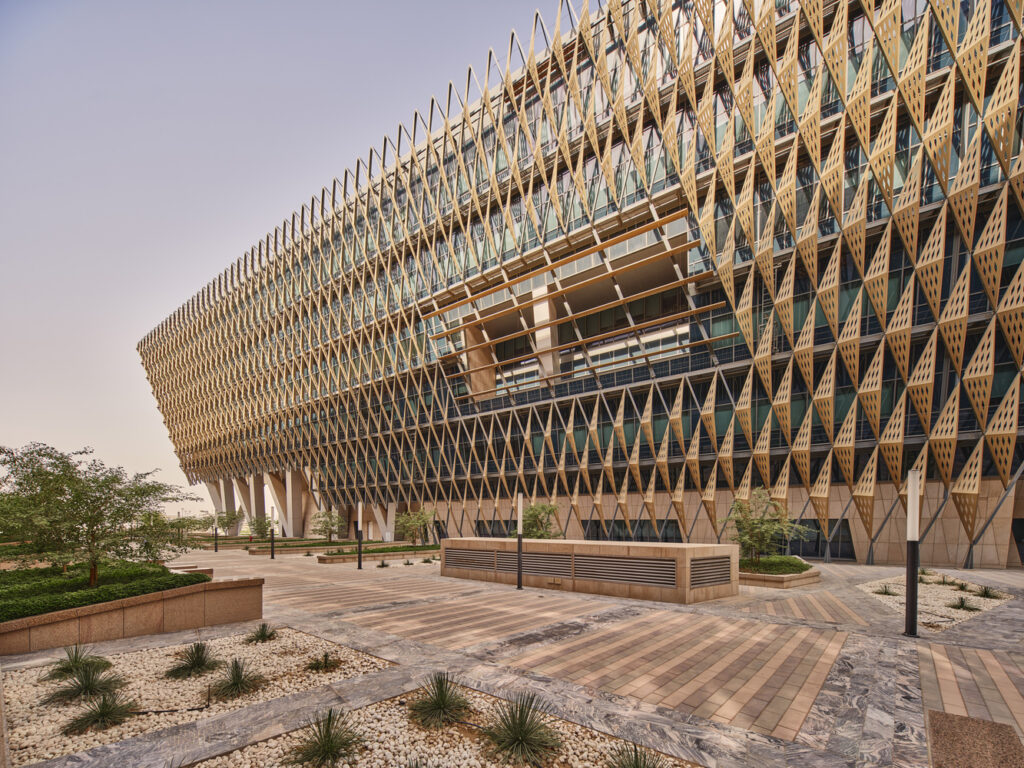
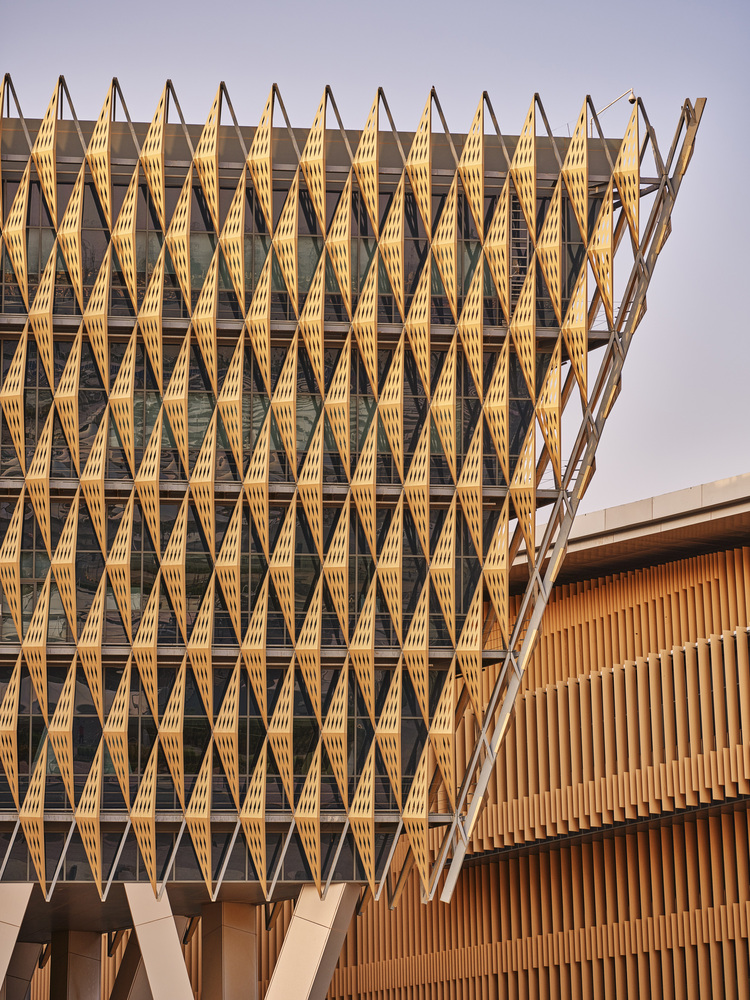
Text description provided by the architects. The College of Life Sciences is a graceful example of a building that combines programmatic requirements and response to a specific site and environmental conditions to create a unique and wholly appropriate college for the study of art and the environment. This exceptionally site-responsive building is notable for its dramatic, angular sloped façade and its cladding of striking, desert-colored, textured material. The array of diamond-shaped forms—perforated metal panels—filter natural daylight and shade the interior from the harsh sun. The color intensity of the golden structure changes with the sun’s movement throughout the day, much like the surrounding desert. The angular geometry of the panel array is echoed in the building footprint and surrounding landscape features.
Exterior walls slope out as they rise, creating a self-shading situation that allows views to the outside without risking unnecessary heat penetrating inside. This is further supported by a screen shading system of perforated metal panels that direct views out and mitigate solar glare. Louvers are positioned on each building’s face to manage light from each compass point, so that north, for example, allows ample light in because this indirect light is optimal for art studios.
The South and west sides have a tighter louver system to still allow views out while keeping the interior comfortable for occupants. Internally, COLS is organized around vibrant, multi-level atria—one of which is focused on student services and includes a food court and informal meeting areas and the other more public-facing, with the diversity of student work visible in demonstration labs and practicum clinics. They provide windows into all COLS activities and foster student/faculty interaction. Each atrium perimeter is a gently sloping spiral stair providing access to all levels, culminating in an oculus in the form of a domed skylight. Fostering student collaboration, informal learning, social connection, and a celebration of the work within were the guiding principles behind the organization of the college around the two substantial atria.